How to Measure Online Campaign Performance? A Practical 2026 Guide


You measure online campaign performance with conversions and revenue, not with clicks or impressions. The metrics that matter most are CR (conversion rate), ROAS (return on ad spend) and ROI (return on investment) — all tied together in GA4 with correctly configured conversion tracking and consent handling (Consent Mode v2). The remaining metrics — CTR, CPC, cost per lead — are supporting indicators that only tell you whether you are heading in the right direction.
In short
Online campaign performance is measured through the lens of your goal, not individual numbers: for sales, what counts are conversions, customer acquisition cost (CAC), ROAS and ROI; for reach — impressions and engagement. Start by defining the goal, then choose the metrics and tools (GA4, Search Console, ad platform dashboards) and set up accurate conversion measurement. Without reliable data (tracking, attribution), even a large budget gets optimised blindly.
Start with the goal, not the tool
Before you look at any metric, decide what the campaign is actually supposed to achieve. You measure a sales-focused campaign differently from one built to grow brand awareness. Typical goals include:
- selling a product or service (e-commerce, lead-to-sale),
- lead generation — a form, a phone call, a newsletter sign-up,
- website traffic and engagement,
- brand awareness — reach and recognition.
The goal defines which metric is decisive for you. A sales campaign judged by the number of impressions will give you the illusion of success — and an empty basket.
Billing models — what you pay for
The billing model tells you when the budget disappears, not whether the campaign makes money. It is still worth knowing, because you match it to the goal:
- CPC (cost per click) — you pay for every click. The foundation of performance campaigns in Google Ads when you want traffic ready to act.
- CPM (cost per mille) — cost per 1,000 impressions. Used in brand campaigns where reach is what counts.
- CPL (cost per lead) — payment per acquired contact (form, sign-up, registration).
- CPS / CPO (cost per sale / order) — you pay only for a sale or an order. The closest to a real business outcome.
Less often you will come across CPI (app install), CPV (video view) or CPD (file download). Whatever the model, remember: billing is a cost, not a measure of effectiveness. You only calculate effectiveness by setting that cost against the result.
The metrics that really speak to results
This is where real measurement begins. These metrics show whether your budget is working:
- CTR (click through rate) — clicks divided by impressions × 100. It tells you whether the ad is attractive and well targeted. A high CTR is a good start, but it does not sell on its own.
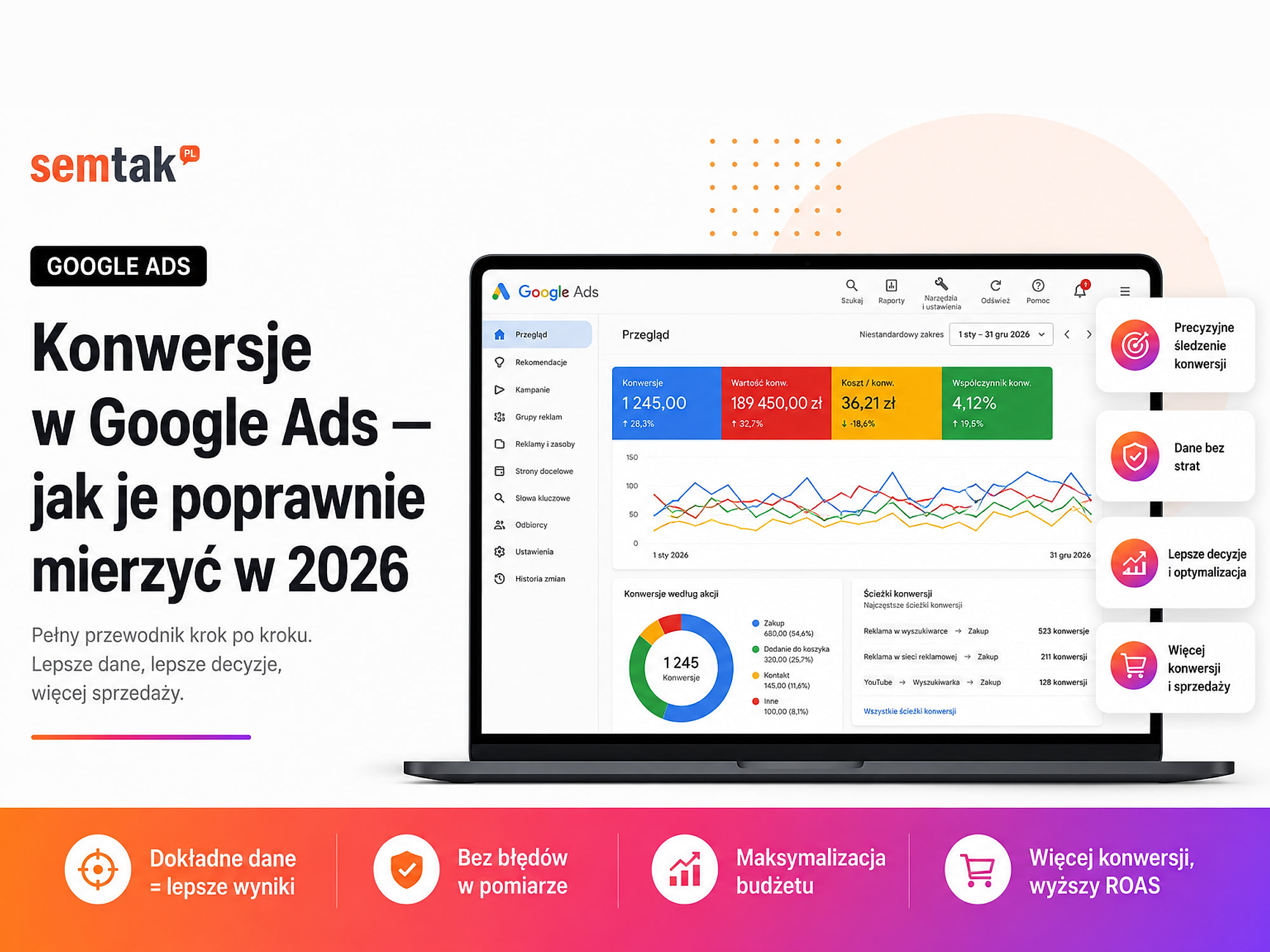
- CR (conversion rate) — the percentage of clicks that turned into a conversion (purchase, form submission). This is the metric that tells you whether the landing page and the offer are doing their job.
- ROAS (return on ad spend) — revenue divided by ad spend. A ROAS of 4.0 means £4 of revenue for every £1 of budget. The key metric in e-commerce.
- ROI (return on investment) — the return on the entire investment, taking into account margin and costs, not just the media budget. The final answer to the question "is this worth it".
- Cost per conversion / cost per lead — how much you pay for one real result. It lets you compare channels against each other.
In e-mail marketing you also get open rate (the percentage of opened messages) and click rate. Helpful, but treat them as creative diagnostics, not as a measure of revenue.
Without accurate conversion tracking, the numbers lie
The most beautiful report is worthless if the data is wrong. Before you trust the metrics, make sure measurement stands on a solid foundation:
- GA4 as the single source of truth — Universal Analytics no longer collects data; all analytics today is built on GA4 events.
- Conversion tracking in Google Ads tied to real actions (a purchase, a submitted form, a phone call), not just a visit to the "thank you" page.
- Consent Mode v2 — the consent requirement without which conversions from Google ads stop reporting correctly in the EU.
- Server-side measurement (server-side GTM) — increasingly necessary, because ad blockers and cookie restrictions cut into data measured only in the browser.
- Data-driven attribution — the default model in Google Ads and GA4, which assigns conversion credit to multiple touchpoints instead of just the last click.
If these elements are not in place, your CR and ROAS show understated or distorted values — and you switch off campaigns that actually sell. If you are not sure what your measurement looks like, a good starting point is an SEO and analytics audit.
What changed in 2026
Campaign measurement today is a different world than a few years ago. Three things you need to know about:
- Less cookie data — conversion modelling and server-side measurement have become the standard, not an add-on.
- Core Web Vitals and INP affect conversion — a slow or "jumpy" landing page kills CR regardless of ad quality. Site speed is now part of the campaign.
- AI Overviews and generative search are changing the purchase journey — part of the traffic no longer clicks classic results, which is why measuring indirect impact (assisted conversions), not just the last click, matters more and more.
How to read the metrics in practice
Numbers only make sense in combination. A few examples:
- High CTR, low CR — the ad attracts, but the landing page or the offer falls short. Fix the landing page.
- Low CTR, high CR — you are reaching the right people, but too narrowly. There is room to scale.
- Good ROAS, weak ROI — sales are there, but the margin does not cover costs. The problem lies in pricing or cost structure, not in the ad.
Evaluate results continuously and optimise iteratively. The sooner you decide which metric is decisive for you, the faster you will catch the moment the campaign drifts off course.
Frequently asked questions
Which metric is the most important?
It depends on the goal. For an online store, ROAS and ROI matter most. For a lead campaign — cost per lead and CR. CTR and CPC are supporting metrics: they tell you whether you are heading in the right direction, but not whether you are making money.
What is the difference between ROAS and ROI?
ROAS is revenue relative to spend on the ads alone. ROI takes into account the full cost and the margin — it answers the question of whether the campaign actually generated profit. You can have a high ROAS and a negative ROI at the same time if the margin is low.
Can you measure campaigns without Consent Mode v2?
You can collect some data, but in the EU, without a correctly implemented Consent Mode v2, conversions from Google ads report incompletely. Today it is a precondition for the ROAS and CR in your dashboard to match reality.
What replaced Universal Analytics?
GA4. Universal Analytics stopped processing data, and the event-based model in GA4 is now the only standard for measuring traffic and conversions in the Google ecosystem.
Does site speed affect campaign performance?
Yes, directly. Poor Core Web Vitals (including INP) and slow loading lower the conversion rate — you pay for the click, and the user leaves before the page loads. Site speed is part of the campaign result.
Want campaigns that genuinely sell and can be measured?
At the SEMTAK Marketing Agency we combine advertising with hard analytics — you know exactly how much you earn on every pound of budget:
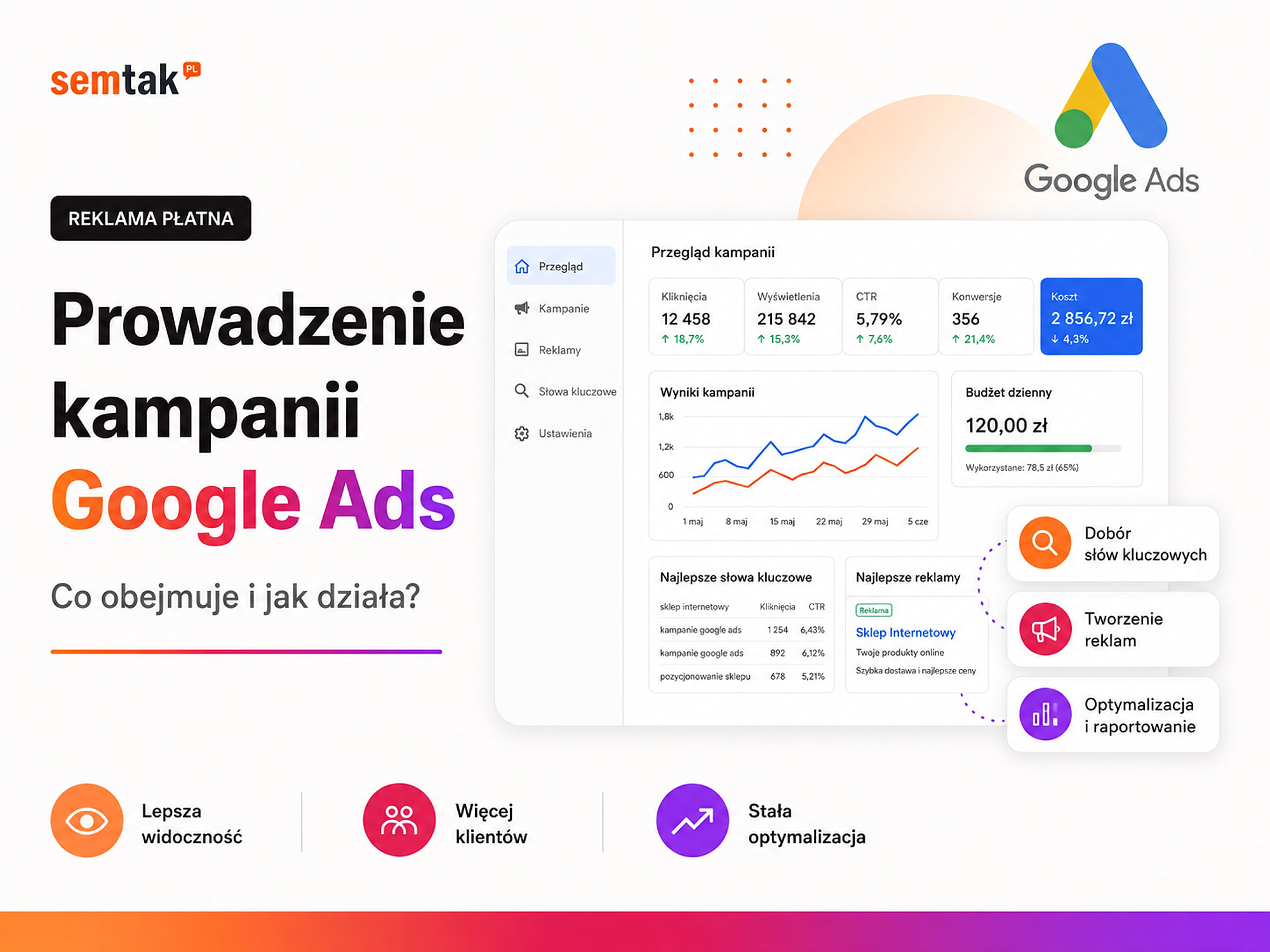
- Google Ads campaigns — management and optimisation for real conversions, not clicks.
- Google Shopping campaigns — product sales with measurable ROAS.
- SEO and analytics audit — we will check whether your conversion measurement is lying to you.
- Marketing packages — advertising, SEO and analytics in one, billed by results.
Not sure how much poorly measured campaigns are costing you? Calculate it in our lost sales calculator.