
SEO in the German Google (Google.de) is, above all, about working on content in correct German, the technical marking of the language version (hreflang) and earning links and trust signals from the German internet. The domain itself, or a server located in Germany, is a minor detail today — positions are decided by whether you genuinely answer the German customer's queries better than the local competition. Below we show how to approach this without making costly mistakes.
In short
SEO in the German Google is based on the same SEO principles as in Poland, but it requires content in correct, natural German (not machine translation), a German domain or proper hreflang, local signals (a German address, phone number, reviews) and adaptation to the local competition and search intent. The DE market is attractive — a large, wealthy economy — but more competitive, so the quality of the language and the credibility of the brand are what count.
Why the German market is attractive
Germany is the largest economy in Europe and one of the strongest e-commerce markets on the continent. For Polish companies — manufacturers, online stores, transport or construction services — it is a natural direction for expansion: geographically close, with high purchasing power and well-established trust in the quality of products from Poland. Google has a clear dominance in search in Germany, so visibility in Google.de is in practice equivalent to visibility on the German internet. Bing plays a supplementary role, mainly on desktop and in the corporate environment.
Language — the most important and most often underestimated element
The most serious mistake Polish companies make is translating text "quickly" or by machine without proofreading. A German B2B and B2C customer immediately spots artificial language, and Google is getting better and better at assessing the quality and naturalness of content. What matters:
- Natural, correct German — best verified by a native speaker, not just a translator.
- German phrases, not a calque from Polish — Germans search differently; keyword research cannot simply be "rewritten" from a Polish campaign.
- Local realities — units, currency (EUR), address formats, and a way of describing delivery and returns that matches German habits.
- Content that answers the intent — descriptions, guides and FAQs that genuinely solve the customer's problem, rather than just stuffing the page with keywords.
The domain and the structure of the language version
You have several correct paths here — the choice depends on the scale and your plans:
- A separate .de domain — a clear local signal, convenient for strong expansion into a single market.
- A subdirectory (e.g. domain.com/de/) — accumulates the authority of one domain, easier to maintain with several languages.
- A subdomain (de.domain.com) — possible, but less often optimal.
There is no single "magic" solution. More important than the format itself is a consistent and correct implementation and consistently directing links and signals to the right version.
Hreflang — without it, expansion falls apart
If you run a Polish and a German version, the hreflang attributes tell Google which version to show to whom. Without them, Google may mix language versions in the results or treat them as duplicates. The rules:
- Each page points to all of its language variants (PL, DE and possibly others) as well as to itself.
- The relationships must be reciprocal — the DE version points to PL and vice versa.
- Use the correct codes (e.g.
de-DEfor Germany,de-ATfor Austria if you are targeting the whole of DACH). - Remember the self-referential
canonicalwithin a given language version.
An incorrect hreflang is one of the most common reasons why "the translated page doesn't rank". We treat validation strictly — it is a foundation, not an add-on.
Link building and trust signals from the German internet
Google assesses whether a site has authority in a given linguistic and geographic context. That is why links and mentions from German sites matter: industry directories, portals, media, partners. In parallel, it is worth taking care of E-E-A-T signals (experience, expertise, authoritativeness, trustworthiness) — in the German version: real company data, an Impressum compliant with local law, and a clear returns and contact policy. This builds trust both with Google and with the customer.
Technical: speed, Core Web Vitals and AI in the results
The German user is demanding and the competition is strong — a slow site loses sales regardless of position. Make sure you have:
- Core Web Vitals, including INP (interaction responsiveness) — crucial for the experience and the assessment of the page.
- Mobile-first — Google indexes the mobile version, so it is the point of reference.
- Correct measurement in GA4 with Consent Mode v2 — in Germany the approach to privacy and consent is restrictive, and the lack of a GDPR-compliant banner is a real risk.
- Readiness for AI Overview / GEO — clear answers, FAQ sections and structured data increase the chance that your content will be cited in AI answers, not just in the classic results.
Who it makes sense for and what to expect
Expanding into Google.de works best where there is real demand and a margin that covers the cost of serving the market: e-commerce (clothing, footwear, home and garden, automotive, parts), transport and removal services, construction and finishing, manufacturing and B2B components. Positioning is a process — the effects build up gradually, and the pace depends on the competitiveness of the phrases, the quality of the content and the budget. Pricing is always individual, because it depends on the number of phrases, their difficulty and the starting state of the site. Honestly: if someone promises you a quick "top 10 in Germany" without any analysis, treat it as a warning sign.
Frequently asked questions
Do I need a .de domain to rank in Germany?
No. You can rank effectively on a subdirectory (e.g. /de/) or a separate .de domain. More important than the extension itself is the correct marking of the language version (hreflang), the quality of the German content and trust signals from the German internet.
Is it enough to translate the Polish site with a translator?
We don't recommend it. Machine translation without proofreading by a native speaker sounds artificial, lowers customer trust and conversion, and often also misses the real German phrases that audiences actually search for. Keywords for the DE market have to be researched separately, not "rewritten" from a PL campaign.
How long does it take to see the effects of positioning in Germany?
It is a long-term process. The first movements are usually visible after a few months, and stable positions take longer to build — depending on the competitiveness of the phrases, the quality of the content, the link profile and the budget. We do not give guaranteed timelines, because honestly they cannot be promised.
What is hreflang and is it really necessary?
Hreflang is an attribute that tells Google which language version of a page to show a given user. With a bilingual site (PL/DE) it is practically mandatory — without it, Google may mix the versions in the results or treat them as duplicates, which harms visibility.
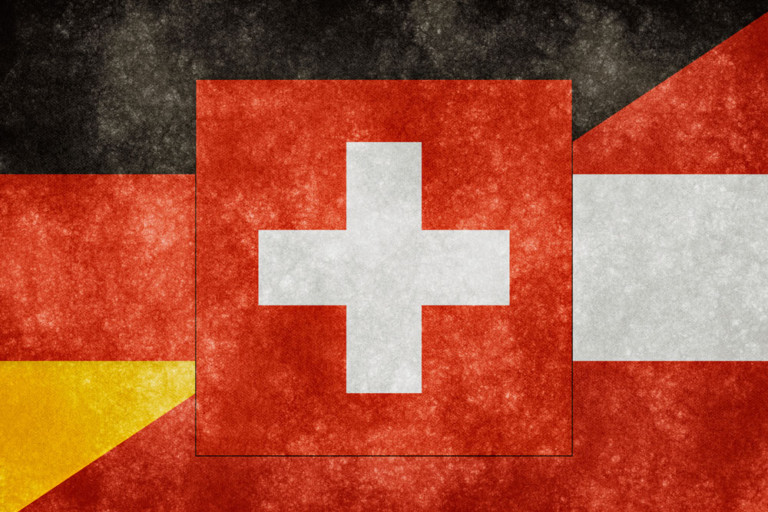
Can I target the whole DACH market (Germany, Austria, Switzerland) right away?
Yes, but it is worth distinguishing the markets through hreflang (e.g. de-DE, de-AT, de-CH) and taking local differences into account — currency, law, linguistic nuances. It is usually sensible to start with one market (usually Germany) and expand once you see a return.
Want to enter the German market without costly mistakes?
At the SEMTAK Marketing Agency we treat DE expansion technically: correct hreflang, content built for real German phrases, and trust signals that convince both Google and the customer:
- Website positioning — visibility on the Polish and foreign markets.
- SEO audit — we will check your hreflang, technical setup and the potential of your site before expansion.
- Online store positioning — for e-commerce sales in Germany.
- Cooperation packages — choose a scope matched to the scale of your business.
Are you also planning paid traffic on the DE market? See Google Ads campaigns and Google Shopping — a quick start for sales before SEO gains momentum.