

Online competitor analysis means systematically checking where your rivals get their traffic and customers from: which keywords they rank for, what content they publish, who links to them and what they advertise on. These days it has nothing to do with "spying" — it relies on publicly available data surfaced by tools such as Ahrefs or SEMrush. Below you'll find a concrete method: who to analyse, with what, and what to look for so you can turn it into your own decisions.
In short
Competitor analysis in SEO means finding out who really competes for your keywords in Google (often not the business around the corner, but a blogger, a comparison site or a shop from another city) and what they do better: their content, keywords, links and site structure. You do it with tools (e.g. Ahrefs, SEMrush) and manually — by examining the pages ranking in the TOP 10. The goal is not to copy, but to find gaps you can exploit.
Who is your real competition in search?
Your business competitors and your Google competitors are often two different lists. The company around the corner may barely exist online, while a blogger or a comparison site is fighting for your keywords. Separate two groups:
- Direct competitors — they offer the same thing you do and target the same customers.
- SERP competitors — sites that rank for your keywords even if they sell something else (guides, rankings, marketplaces, forums).
In practice: type 5–10 of your most important keywords into Google and write down the domains on the first page. These are the companies you genuinely compete with for visibility — and they are the ones worth running through the tools.
Competitor analysis tools — what each one checks
The market has moved on considerably. Some of the old tools (like Alexa Rank) no longer exist. Today the core toolkit looks like this:
| Tool | What for |
|---|---|
| Ahrefs / SEMrush | A competitor's organic keywords, their top pages, backlink profile, paid keywords (Google Ads). |
| SimilarWeb | Estimated traffic, traffic sources (organic, paid, social, direct), engagement — good for sizing up the whole industry. |
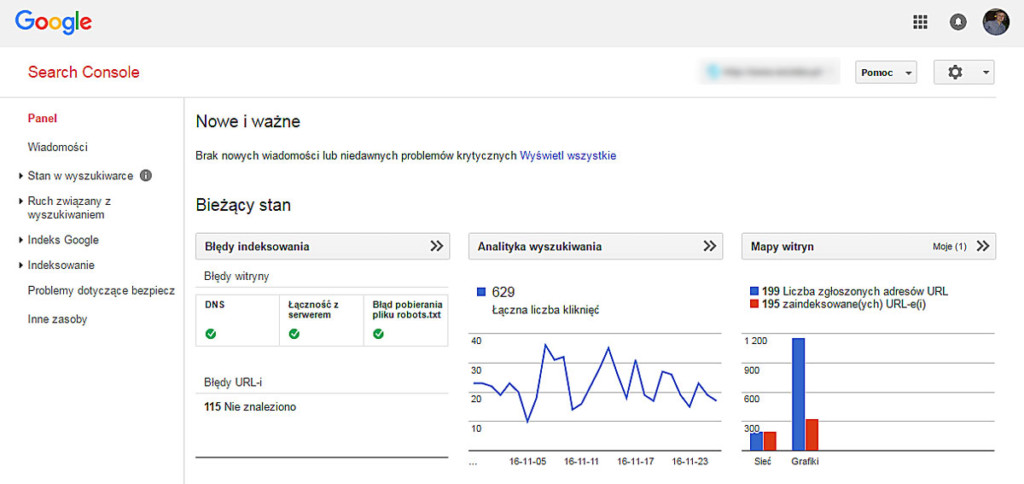
| Google Search Console | Your own data: queries, clicks, CTR and positions in organic results. |
| Google itself + ad libraries | A look at the SERP and the ad libraries (Meta, Google) — what your competitors say and how they say it. |
Keep one thing in mind: every tool measures traffic differently and works with estimates. Don't compare numbers from different systems head to head — always compare within a single tool. This data tells you about trends and proportions, not a competitor's exact revenue.
Content gap — what your competitors have and you don't
This is one of the most profitable analyses you can run. A content gap shows the keywords that several of your competitors rank for while you don't rank at all. In other words: the topics where they collect traffic and you are invisible.
- In Ahrefs/SEMrush, drop your domain plus 2–3 competitors into the Content Gap / Keyword Gap report.
- You get a list of the keywords you're missing — a ready-made backlog of topics for your blog and landing pages.
- Check the intent behind each keyword: informational (blog), commercial (service/product page) or transactional (category).
The result: instead of guessing what to write about, you have a list of topics validated by your competitors' real traffic. That is the very heart of a Google visibility strategy.
SERP analysis — how to win specific results
Google rankings are no longer just ten blue links. Before you plan to fight for a given keyword, analyse what its results page looks like:
- The content format Google rewards — a guide, a ranking, a product page, a category? If the front page is all guides, a sales page is unlikely to rank high.
- SERP features — featured snippets, "People Also Ask", images, maps, and increasingly often AI Overviews. They decide how many clicks are left to share at all.
- The strength of the TOP 10 pages — are they powerful, established domains, or can they be overtaken with better, fresher content?
For AI Overviews and search engines like ChatGPT or Perplexity, one extra thing matters today: whether your content clearly answers the question in the very first paragraph — the so-called answer-first approach, and an element of E-E-A-T (experience, expertise, authoritativeness, trust).
Backlink gap — where your competitors get their authority
Inbound links are still one of the strongest ranking signals. Analysing a competitor's link profile answers the question: why do they rank higher when their content is similar?
- The backlink gap in Ahrefs shows domains that link to your competitors but not to you — a list of potential link sources.
- Check your rival's most linked-to pages — it's often a specific guide or tool that attracts links naturally. You can build a better version.
- Judge quality, not quantity — one link from a strong industry site is worth more than a hundred from spammy directories.
Google Ads campaigns — what your competitors advertise and on which terms
You can look over your rivals' shoulders in paid results too — legally, based on public data:
- In Ahrefs/SEMrush you can see which paid keywords a competitor bids on and which landing pages they send the traffic to.
- If you run campaigns yourself, the Auction Insights report in Google Ads shows who you actually compete with for the same impressions and how often you overlap.
- You'll find the ad copy itself (headlines, offers, USPs) in the Google and Meta ad libraries — a ready-made sample of your competitors' messaging.
From this data you'll see whether it makes more sense to fight in organic results or to supplement your traffic with Google Ads campaigns and Google Shopping for an online store.
Watch out for traps in the data
Before you make a decision based on a chart, check two things. First — the methodology: where the tool gets its data from and how it estimates it. Second — the sample: how many keywords, domains or time periods the analysis covers. Numbers from different systems never agree with each other and will never give you 100% certainty. Treat them as a strong signal and a starting point, not as gospel.
Frequently asked questions about competitor analysis
Is competitor analysis legal?
Yes. You are using publicly available data: search results, website content, ads and estimates from analytics tools. It has nothing to do with illegally obtaining information — it's standard market practice.
Which tool should I pick first?
If you have the budget for one tool, choose Ahrefs or SEMrush — both combine organic keyword, backlink and ad analysis in one place. To gauge traffic across the whole industry, add SimilarWeb. Your own data is always free in Google Search Console.
How often should I analyse my competitors?
A full, deep analysis is worth doing once a quarter or when planning a strategy. A quick review of your key competitors (new content, ranking changes) once a month is enough.
What should I do with the results?
Turn them into tasks: missing topics from the content gap go into your content plan, link sources from the backlink gap into your off-site activities, and SERP insights shape the format and quality of your pages. Analysis without implementation is just trivia.
Want to outrank your competitors in Google?
At the SEMTAK Marketing Agency we run competitor analyses that end with a concrete action plan, not a report for the drawer:
- SEO audit — we'll check what is really holding back your visibility compared with your rivals.
- Website SEO — we build visibility for the keywords that bring in customers.
- Online store SEO — more traffic and sales for your WooCommerce store.
- Monthly packages — see how we can run your marketing month after month.
Running a store? Start with our guide WooCommerce SEO — where to start.
Frequently asked questions
Is competitor analysis legal?
Yes. You are using publicly available data: search results, website content, ads and estimates from analytics tools. It has nothing to do with illegally obtaining information — it's standard market practice.
Which tool should I pick first?
If you have the budget for one tool, choose Ahrefs or SEMrush — both combine organic keyword, backlink and ad analysis in one place. To gauge traffic across the whole industry, add SimilarWeb. Your own data is always free in Google Search Console.
How often should I analyse my competitors?
A full, deep analysis is worth doing once a quarter or when planning a strategy. A quick review of your key competitors (new content, ranking changes) once a month is enough.
What should I do with the results?
Turn them into tasks: missing topics from the content gap go into your content plan, link sources from the backlink gap into your off-site activities, and SERP insights shape the format and quality of your pages. Analysis without implementation is just trivia.